In a world designed for the right-handed majority, left-handed surgeons often face a unique set of invisible hurdles. From restricted exposure to specialized equipment during residency to a lack of dedicated coaching, the “lefty” path in the OR can be unnecessarily stressful. Statistics even suggest that left-handed practitioners may be more prone to needle-stick accidents and equipment fatigue simply because they are forced to adapt to tools that work against their natural ergonomics.
At Euro Surg, we believe that precision shouldn’t be a privilege of the right-handed. We are proud to provide high-quality, left handed instruments designed to level the playing field, including:
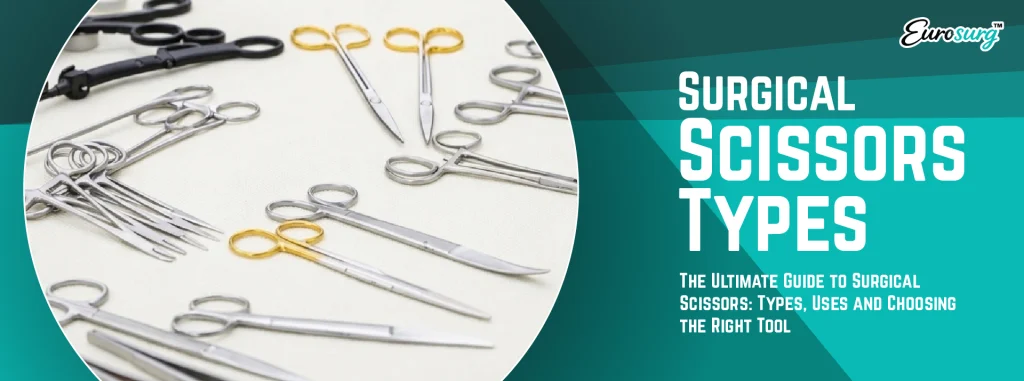
- Scissors: Bandage, Mayo, Metzenbaum, and Iris.
- Forceps: Mosquito Hemostatic and Rochester Carmalt.
- Needle Holders: Olsen Hegar (with integrated scissors) and standard Mayo-Hegar models.
Left Handed Instruments
Why Specialized Left Handed Instruments Matter
Surgery demands extreme accuracy and fluidity. Forcing a left-handed surgeon to use right-handed tools isn’t just uncomfortable it can impact surgical outcomes. By utilizing instruments specifically engineered with reversed ratchets and blade configurations, surgeons gain:
- Equivalent Precision: Achieving the same micro-accuracy as right-handed peers in sensitive procedures.
- Intuitive Movement: Utilizing natural muscle memory without the “mental lag” of compensating for mirrored tool design.
- Reduced Fatigue: Smooth tool engagement and release, allowing for longer periods of focus without hand strain.
- Safety: Better control over sharp edges and needle releases, significantly lowering the risk of accidental injury.
Tips for Setting Up the Left Handed Instruments in OR
Preparation is the key to a seamless procedure. If you are a left-handed surgeon or an instructor training one, consider these environmental adjustments:
- Advance Notification: Inform the scrub team and circulating nurses ahead of time. This ensures the correct left-handed tray is pulled and organized before the first incision.
- Anesthetic Coordination: Left-handed surgeons often require different positioning and more “elbow room” on the opposite side of the table. Coordinate with the anesthesia team to ensure tubing and monitors don’t obstruct the primary surgeon’s range of motion.
- Spatial Awareness: Discuss “spreading strategies” and ergonomics for tasks like aortic cannulation or duct scraping, as the angles of approach will be mirrored.
The Mechanics of the “Lefty” Advantage
To understand the frustration of a left-handed surgeon, one only needs to look at the Needle Holder.
A right-handed surgeon unlocks a needle holder by pushing their thumb against the upper handle, naturally disengaging the ratchet. When a left-handed surgeon uses that same tool, that same pushing motion actually forces the ratchet teeth together, locking them tighter. To open it, they must awkwardly pull the handles apart with their fingers—a movement that lacks control and speed.
The Solution: Our left-handed needle holders feature a reversed ratchet. This allows the left-handed surgeon to use the same natural thumb-pushing motion to trigger the unlock mechanism, mirroring the efficiency of their right-handed colleagues.
Conclusion
While 90% of the world is right-handed, the remaining 10% shouldn’t have to compromise on surgical excellence. Becoming a surgeon is challenging enough without the added hurdle of “fighting” your equipment. At Euro Surg, we are committed to providing the specialized tools necessary to make your practice as intuitive and precise as possible.
Ready to upgrade your kit?
[Explore the Euro Surg Left-Handed Collection here.]
Frequently Asked Questions
Q: Why can’t I just use right-handed instruments in my left hand?
While possible, it is mechanically inefficient. For example, with standard scissors, the shearing action of a left hand pulls the blades apart rather than pushing them together, leading to ragged cuts and hand fatigue.
Q: What is the main difference in a left handed Needle Holder?
The primary difference is the ratchet direction. In a right-handed holder, the thumb pushes to unlock. In a left-handed holder, the ratchet is reversed so a left-handed thumb-push unlocks the tool naturally, rather than locking it tighter.
Q: Are left handed instruments more expensive?
Because they require specialized manufacturing runs and mirrored molds, they can sometimes carry a higher price point. However, at Euro Surg, we strive to keep our ergonomic line accessible to ensure all surgeons have the tools they need for safety and success.
Q: How can I tell if an instrument is truly left handed Instruments?
Look at the blades or the ratchet. In left handed scissors, the top blade will always be on the left when the scissors are open. In needle holders, the locking mechanism will release easily when pushed by a left thumb.
Q: Does Euro Surg offer sets for left-handed students?
Yes! We offer curated starter kits that include the most essential mirrored instruments, such as Mayo scissors, needle holders, and hemostats, at a bundled discount.